

How it works
The situation and the people in it, in one view
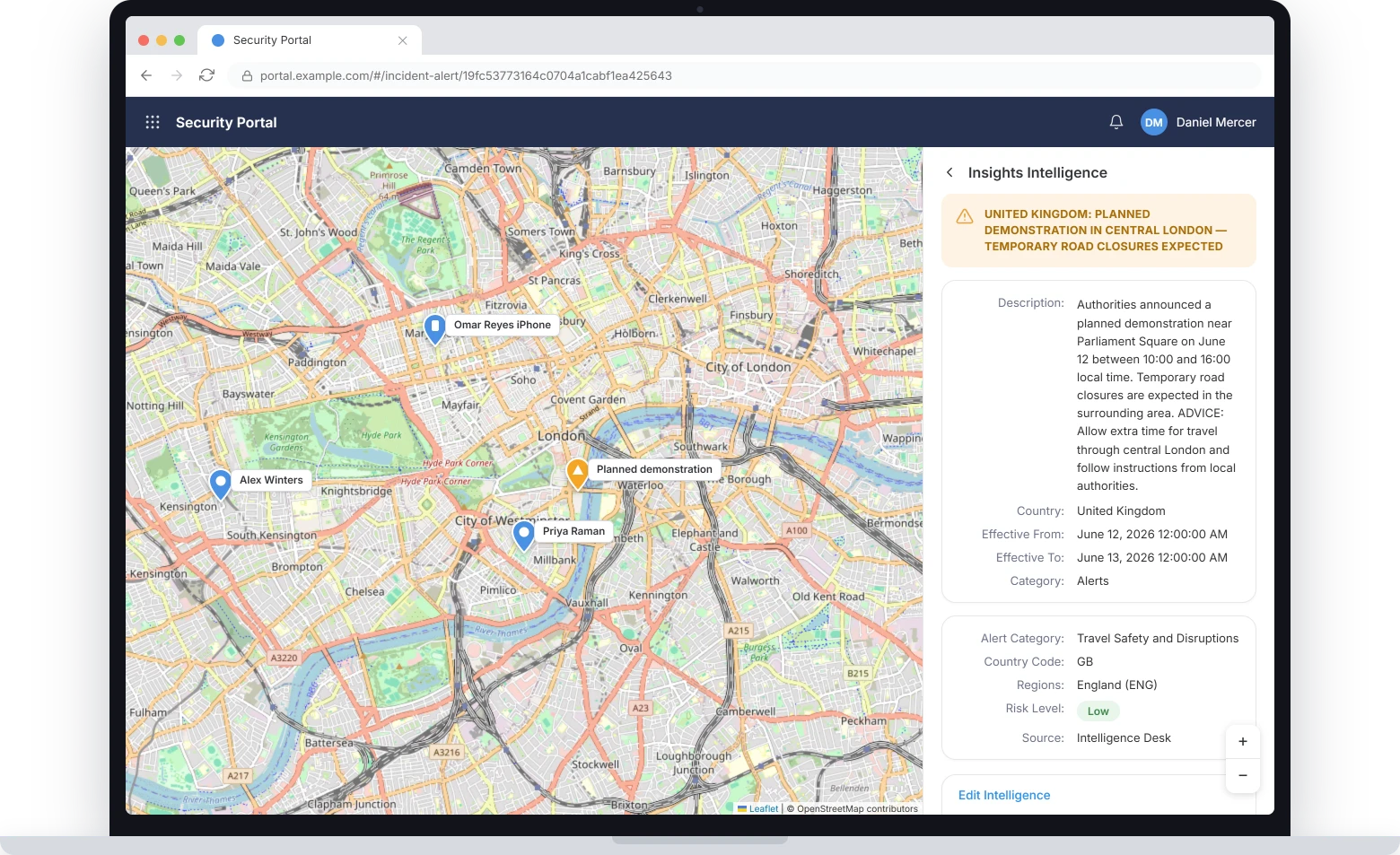
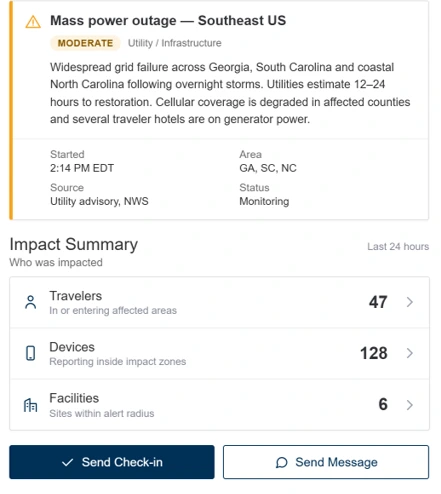
A disruption, step by step
What the platform does before anyone calls a meeting
An event arrives and is scored for severity and location immediately.
Your footprint is already known: devices reporting position, itineraries tracked passively, offices and operating sites on the map. Proximity does the rest.
Your own rules decide the response. Messages, notifications, and alerts distribute themselves to the people the event actually reaches.
Instant action, and instant accountability: who was told, on which channel, and who has answered.
Rules engine
Rules that stack, and reach back into the field
Fire on a device, an intelligence alert, or an itinerary change. Escalate, start check-ins, publish an advisory, or change a tracker's settings mid-incident. Then let one rule's outcome trigger the next.
Packaging
Direct, white-label, or through a partner
Scoped by the modules you turn on and the people you cover, not by a fixed tier.
Direct
Your own tenant, run by your team.
White-label
Your brand on the portal and the app.
Partner-delivered
Bought and supported through a provider.
Partners and resellers
Deliver CI360 under your own brand
Security providers, travel managers, and intelligence firms run CI360 under their own brand, giving their clients tracking, intelligence, and operations management.
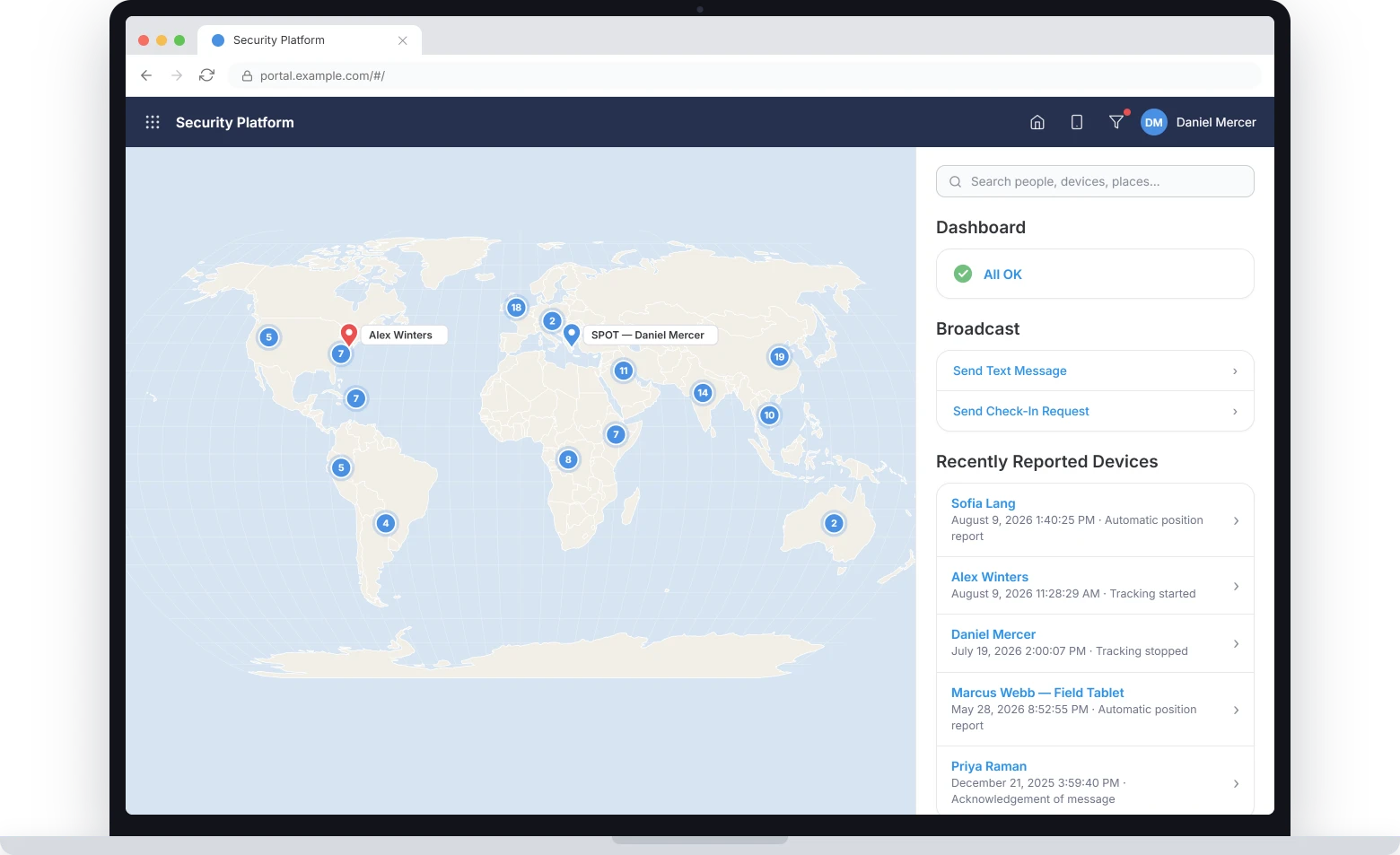
See CI360 running on your own travel data
A working session with the team that builds it. Bring a route, a region, or a scenario you care about.